 is available on DVD today! I had a blast playing Takeru and I really hope you enjoy the series. It's really fun, and has a lot of heart so check it out!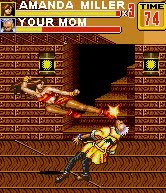
This blog is part of a 12-step program to recovering from chronic dorkdom...except without the whole recovery business. I'd consider this blog more like an outbreak of a dorky zombie virus except there will be more brains, and hopefully less of the putrid flesh smell.
Tuesday, September 27
Squid Girl released on DVD today!
Squid Girl Series Part 1 is available on DVD today! I had a blast playing Takeru and I really hope you enjoy the series. It's really fun, and has a lot of heart so check it out!
is available on DVD today! I had a blast playing Takeru and I really hope you enjoy the series. It's really fun, and has a lot of heart so check it out!
Saturday, September 17
My First Episode of AnimeTV!
For all you anime fans out there, check out my first episode as a new cast member of AnimeTV where we review the series 'Witchblade.'
http://www.youtube.com/watch?v=8YHN348BTGc

http://www.youtube.com/watch?v=8YHN348BTGc
Saturday, August 6
6 Beloved Characters That Had Undiagnosed Mental Illnesses
Check out an article I recently co-wrote for Cracked.com with Chris Radomile. Ladies and Gentlemen, 6 Beloved Characters that Had Undiagnosed Mental Illnesses.
You're welcome.
You're welcome.
Wednesday, July 27
Hey guys, I know I dropped off the face of the earth for a few months but I've been busy with my voice-over career and paying rent and all that grown up nonsense, but I promise I will start writing more soon. In the meantime, check out this article I wrote for Dorkly.com "Everything I Need to Know in Life I Learned from Streets of Rage."
Enjoy, like, share, "live long and prosper" and all that jazz:
http://www.dorkly.com/article/19885/everything-i-need-to-know-in-life-i-learned-from-streets-of-rage

Enjoy, like, share, "live long and prosper" and all that jazz:
http://www.dorkly.com/article/19885/everything-i-need-to-know-in-life-i-learned-from-streets-of-rage
Friday, January 7
Boy Genius, Interrupted: A Psychological Profile of Dexter
Dexter. A two foot tall, 9-year-old American boy genius with an inexplicable Russian accent, glasses, and his own secret laboratory behind a bookcase in his bedroom. What else is there to know?
A lot, in fact.
With my bounty of free time over the holidays, Dexter’s Lab re-runs and the Season 1 DVD , and 4/5ths of a Psychology degree, I decided to put him under my lens to see just what makes our favorite animated boy genius tick.
, and 4/5ths of a Psychology degree, I decided to put him under my lens to see just what makes our favorite animated boy genius tick.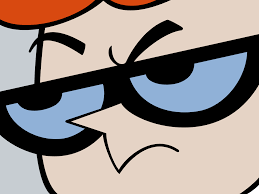 |
| "...Oh Boy." |
Dexter exemplifies the experience of isolation and social awkwardness that many children face as they try to discern their place in the world. The maturation process doesn’t end in adulthood; it is a life-long journey that culminates in, what humanist psychologist Abraham Maslow called, “self-actualization:”
"What a man can be - he must be, this need we may call self-actualization. It refers to the desire of self-fulfillment, namely to the tendency for him to become actualized in what he is potentially. This tendency might be phrased as the desire to become more and more what one is, to become everything that one is capable of becoming."
Maslow created a pyramid-shaped diagram of human needs broken down by their priority and urgency to which they must be addressed in one’s life. This diagram is referred to as Maslow’s “Hierarchy of Needs” and it has 5 distinct levels:

The needs at the bottom of the pyramid naturally take up the most space because you can’t build a stable pyramid without a solid foundation. Although they are the most primal and basic, they are integral to survival and ultimately transcendence to the next level of self-actualization.
Fact: You can’t find out who you are and the value of your existence if you starve to death or get eaten by bears first.
The theory is that once the more fundamental physiological and safety needs are fulfilled, you can then focus on fulfilling the needs of love and belonging, self-esteem, and ultimately, the satisfaction that comes from realizing your potential and existing with a sense of purpose, authenticity, and vitality.
If we skip a step, whether out of ignorance, arrogance, or impatience, our pyramid will topple and we’ll have to continually rebuild from the ground up.
Although Genndy Tartakovsky most likely didn’t consult Maslow’s pyramid when creating Dexter’s Lab, I find it interesting that most of the episodes end with the destruction of his lab, sometimes by Dee Dee’s hand but more often resulting from some misstep of his own. Usually Dexter overestimates his ability, ignores advice, or miscalculates at some point in the episode, which sets the stage for his downfall each and every time. Every journey experiences some turbulence here and there, but when strife occurs as frequently as it does in Dexter’s life, Maslow would probably say he needs to re-evaluate how he’s going about his actualization process and make sure he's not trying to go out of order.
 |
| "I pity the fool who don't understand that it's called a hierarchy for a reason." |
Dexter is financially provided for and lives in a safe middle class neighborhood in Suburbia so his Physical and Safety needs are taken care of which puts him higher on the ladder of actualization than many. The search for true love and acceptance from other human beings however, poses one of life’s greatest challenges whether you’re a 9-year-old science geek with a weird accent, or a senile cat lady named Dorris.
What makes this stage such a challenge is that we can’t force others to love us, like us, or even tolerate us. There are so many external factors that can dictate our acceptance or rejection from the pack: weight, color, class, acne, unconventional hobbies, an aversion to showering, etc. As Raisin in the Sun playwright Lorraine Hansberry once said, “That which makes you exceptional, if you are at all, is inevitably that which will also make you lonely.”
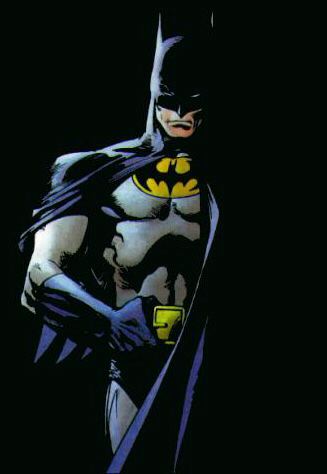 |
| "I love how you just get me, Lorraine." |
Dexter is lonely. How much of his loneliness is based on external rejection and how much of it is self-imposed is another story entirely. To some extent, Dexter embodies Dr. Carol Pearson’s “Orphan archetype” which rebels against the world and says “Who needs ‘em? I can do this on my own.” Dexter does not actively seek friendships and instead isolates himself in his lab all day to perfect his experiments. I think he somehow fantasizes that once he uses his genius to distinguish himself from the hoi polloi, he will suddenly gain acceptance or at least admiration from the world.
He has created an unhealthy cycle wherein he ignores his need for human intimacy to instead focus on building esteem, but his self-esteem is almost entirely based on the opinions and accolades of the very people with which he had no desire to build relationships in the first place. Oy.
In the episode Average Joe, Dexter gets the wrong IQ test results and completely loses his sense of self when he is labeled simply “average.” He forces himself to adopt a new social circle, new habits, and new style of dress because he no longer has a grasp of who he is. His identity is directly linked to his status as a boy genius. Outside of that, he is a very insecure and confused individual who craves simultaneously belonging to a community and standing apart from the crowd yet can only seem to do one or the other.
Much to his chagrin, the closest social bond he has in his life to someone who isn’t his beloved computer, would be with his annoying older sister, Dee Dee. Although he has countless security measures to keep out intruders, Dee Dee – whose brain capacity is about on par with that of marmalade-- always finds a way to infiltrate his lair and mess with his experiments. He knows his sister is not a source of intellectual competition for him yet she is always able to push his buttons (often literally). When Dee Dee needles him about his short stature, faulty vision, physical weakness, and sense of style, Dex is rattled to his core.
 |
| "What's wrong with his sense of style? Well, aside from his glaring lack of a color coordinated fez and bow tie, that is." |
Like most children, he is extremely sensitive regarding his shortcomings (no pun intended…okay maybe a little bit) and often tries to overcompensate. His sole mission in several episodes is to create a machine that will turn him into an adult with dashing good looks, broad shoulders, and a stature that commands respect from his parents, his peers, and his cute baby-sitter. He idolizes TV hero Action Hank because Hank is the archetype of machismo, the epitome of everything Dexter -- with his cumbersome intellect, distaste for the outdoors, and muscles with the consistency of fettuccini-- will probably never be.
Insecurity dictates nearly all of Dexter’s interactions with his intellectual peers. He resents his nemesis, Mandark, for lording his superior laboratory facilities over him and constantly reminding the vertically-challenged redhead that he is merely a second rate version of himself. When Dexter finds his genius doppelganger family at the grocery store, he is eager to experience life with like-minded science-centric parents whose idea of fun is mandatory pamphlet reading time and measuring the scientific properties of fruit but he realizes he can’t stand out in a family of geniuses. When he transforms his sister into a fellow braniac to serve as his lab assistant, his insecurities run rampant because she is not a subservient source of accolades, but a threat to his intellectual status.
He thinks he craves empathetic companions who would truly appreciate his scientific prowess but in each confrontation with a fellow genius he soon realizes that he lacks the stamina and self-assurance to survive amongst people like himself. By consistently disturbing the Needs Hierarchy and prioritizing Esteem over Belonging, Dexter now approaches relationships in an unhealthy manner where he sees people as merely a means to an end. Since building himself up is all that matters, when it comes to companionship he simply wants someone who can reflect his genius back to him, not necessarily someone to challenge him or help him grow.
In his world, there’s only room for one Dexter.
 |
| Okay, scrap that theory. |
Ultimately it would seem as though his insecurities cause him to isolate himself so he is really only competing against himself yet, as we all know, we can be our own worst critics and our fiercest competition. Psychoanalyst Karen Horney listed 10 “Neurotic Needs” that motivate different types of people and would probably infer that Dexter’s neurosis is the “Need for Personal Achievement.” Writer Kendra Cherry explains:
“According to Horney, people push themselves to achieve greater and greater things as a result of basic insecurity. These individuals fear failure and feel a constant need to accomplish more than other people and to top even their own earlier successes."
The need for him to constantly build bigger and better experiments is of an internal nature so there is no external litmus test to measure his success or failure, therefore he can keep competing with himself indefinitely and never satisfy his achievement quota.
His need for creation may also be a means to distract from and suppress his destructive tendencies. On several occasions, we see beneath his unfeeling, analytic demeanor and get a glimpse of his almost demonic lust for power and domination. For him, scientific creation serves as a socially acceptable outlet into which he can channel his manic and borderline-sociopathic energy. Note that although not necessarily the original intent, many of his creations have the capacity to harm and cause mayhem and nearly all of them come equipped with self-destruct buttons.
 |
| Flawless Victory. Dexter Wins. |
As psychoanalyst and crack-addict Sigmund Freud would say, Dexter’s primal subconscious, or Id, is constantly battling his morally upright Superego for dominance in his psyche. When the Id is allowed to dominate, level-headed analytical Dexter is consumed by the Dexter that just wants to conquer civilization while laughing maniacally and setting things on fire. When his Superego is dominant, the Id is suppressed and his inner megalomaniac is relegated to the backseat. For the time being.
In The Way of the Dee Dee, we see Dexter drop his stoic facade on his path to emotional freedom with Dee Dee as his guru. At first he only reluctantly adheres to his sister’s loose, care-free lifestyle. Within minutes however, the student surpasses the teacher and Dee Dee realizes too late that by taking away his structure and inhibitions she’s unleashed his inner monster. “No longer the quiet creator but a mad destroyer,” she laments as she surveys her brother sadistically laying waste to his once-prized laboratory in an Id-riddled frenzy. Dexter’s primal urges are so much more pronounced because a) he was drawn that way and b) he doesn’t process his deeper, darker emotions so they fester and swell in the bowels of his subconscious until the Id finally comes out to play and wreak havoc.

Dexter is still young, and although he is extremely intellectually precocious, he has a lot to learn about life, love, and happiness. Until he learns that self-actualization is not a race but a process, and cutting corners or skipping steps only sabotages his efforts, he will be doomed to continue his cycle of insecurity and arrogance, creation and destruction, craving the world and a rejecting it. Once he stops viewing others as usable objects and learns the value of true companionship, thereby accepting the human need for love and other people, he will finally be able to give love and be loved.
 |
| When you're animated, Jazz hands are always appropriate. |
Monday, November 15
Lost in Translation - The Japanese Origins of the Mighty Morphin Power Rangers
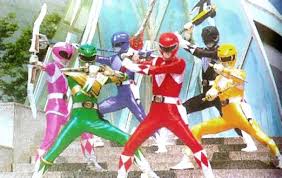
If you were a kid in the 1990s and had basic cable, you are probably familiar with the spandex clad, butt-kicking super team known as The Mighty Morphin Power Rangers.
 |
| Not quite. |
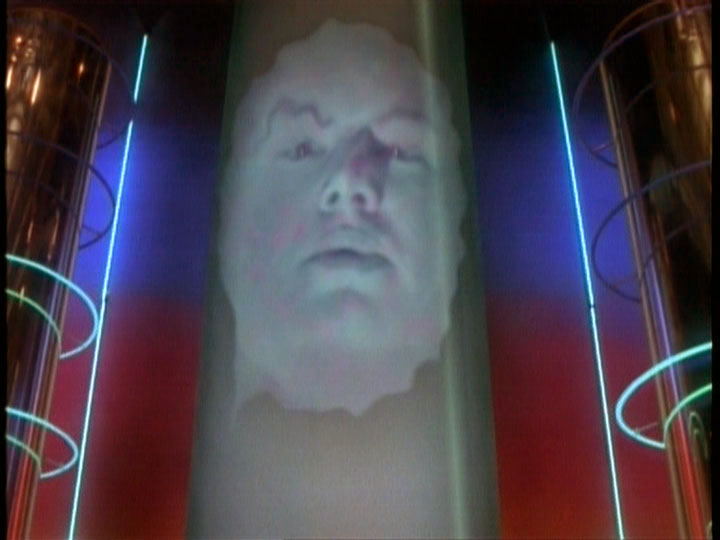
The show begins when Rita Repulsa, an evil alien sorceress who has been sealed away in her planetary prison for the past 10,000 years, is released by two hapless astronauts. I guess plans of world domination must be a popular form of recreation for for those recently sprung from the joint because the first things all evil sorcerers seem to want to do when they are released is take over planet Earth for no apparent reason. The all-knowing, giant floating head, Zordon --
 |
| Like so |
-- tells his robot assistant Alpha to find him five “overbearing and over-emotional humans,” (i.e. teenagers) to become the defenders of the planet. Because we all know that we like our supernatural crime fighting teams the way we like our pop idols: beautiful, oversexed, and underaged.
 |
| The original 1993 cast of The Mighty Morphin' Power Rangers. |
The rangers assembled are all high school students from Angel Grove, California: Billy (Blue ranger), Jason (Red ranger), Zack (Black ranger), Trini (Yellow ranger), and Kimberly (Pink ranger).
They gain weapons from Zordon as well as morphers, communicators, and their respective Zords -- giant fighting robots in the shape of their respective dinosaurs. When the villain is too strong for the rangers and their Zords individually, the machines unite to create the Megazord.
 |
| The DinoZords |
In each episode they have a personal issue they’re dealing with in school whether it be gymnastics competitions, getting good grades, or trying to get signatures for a petition to save the environment. You know, the stuff actual high-schoolers are too caught up in their facebook drama to care about. The only thing that really puts a damper on their fun are the two school bullies, Bulk and Skull, a Laurel and Hardy team who provide slapstick comedic relief. Remember, this was back in 1993 when bullying was shoving you into lockers, not viciously singling you out to diligently cut away your self-esteem until you’re driven to suicide. This was afternoon programming for children after all.
The wholesome high school shenanigans were usually interrupted by some sort of monster sent down by Rita Repulsa who – having not yet figured out how to hook up her cable – basically had nothing better to do.
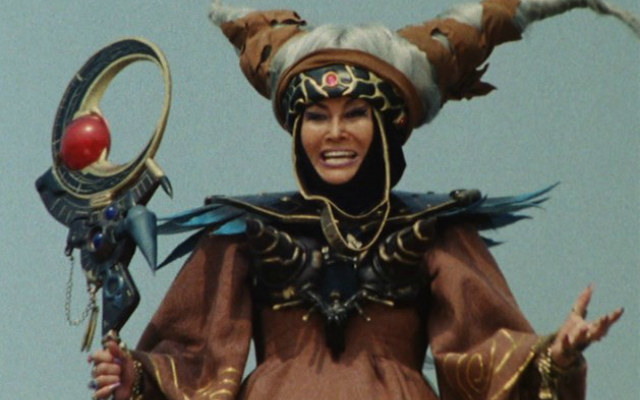 |
| Rita Repulsa, probably about to break something. Just cuz. |
Based on your level of dorkdom (or a certain level of “I never really gave a crap”), you may or may not be aware that this show was based off of and used footage, props, monsters, and costumes from a popular Japanese Super Sentai series (sentai meaning essentially “task force”) known as Kyoryu Sentai Zyuranger which originally aired in Japan in 1992.
In the original series, the creators pull a Dr. Who and create an anachronistic "wibbly wobbly, timey wimey" version of history so that 170 Million years ago, tribes of dinosaurs simultaneously co-existed with beings that descended from dinosaurs (who look an awful lot like humans) literally translated on several websites I found as "Homo Dinosaurs." I would make a joke about that, but I'm not five-years-old.
I'm four-and-three-quarters, thank you very much.
I'm four-and-three-quarters, thank you very much.
The dinosaurs and these prehistoric humans lived side-by-side in five tribes that were protected by their individual Beast Guardians (a pterodactyl, triceratops, sabretooth tiger, t-rex, and a mammoth) until the witch Bandora (who flipping hated dinosaurs and children) set out to destroy them all.
Fortunately, the five Beast Guardians were able to seal her away on Planet Nemesis where she wouldn’t constantly kill things. As a safeguard, one member of nobility was chosen from each clan to be put to sleep and only awoken if Bandora were to somehow escape her prison. These nobles were: Mei, the Risha Tribe's Warrior of Love (The Pteraranger), Dan, the Etoph tribe Warrior of Courage (The Triceraranger), Goushi, the Sharma tribe Warrior of Wisdom (The Mammothranger), Boi the Daim tribe Warrior of Hope (The Tigerranger), and Geki, the Yamato tribe Warrior of Justice (The Tyrannoranger).
Fortunately, the five Beast Guardians were able to seal her away on Planet Nemesis where she wouldn’t constantly kill things. As a safeguard, one member of nobility was chosen from each clan to be put to sleep and only awoken if Bandora were to somehow escape her prison. These nobles were: Mei, the Risha Tribe's Warrior of Love (The Pteraranger), Dan, the Etoph tribe Warrior of Courage (The Triceraranger), Goushi, the Sharma tribe Warrior of Wisdom (The Mammothranger), Boi the Daim tribe Warrior of Hope (The Tigerranger), and Geki, the Yamato tribe Warrior of Justice (The Tyrannoranger).
 |
| Prince Geki and his merry band. |
Predictably, humans – who seem to like to open things just because they can – discovered her secret prison while on a space mission and broke the seal, releasing the witch and her minions. As a means to thank them, she blows the astronauts into space, sending them hurtling weightlessly to their deaths. Apparently she was in a hurry and the Hallmark store was closed.
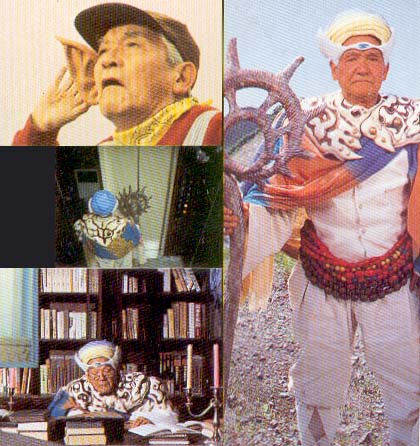
Barza, a wizard-ish dude who was the basis for Zordon, uses his massive ear to hear the seal being broken from millions of miles away back on earth.

He then springs into action to wake up the slumbering heroes and thus their journey begins. Along the way, they gain new weapons from the guardians as well as the ability to harness the power of a God who emerges only when the five Beast Guardians unite.
He then springs into action to wake up the slumbering heroes and thus their journey begins. Along the way, they gain new weapons from the guardians as well as the ability to harness the power of a God who emerges only when the five Beast Guardians unite.
 |
| God. |
In the first season of the Mighty Morphin Power Rangers, most of the fight scenes and in-costume sequences (aside from things taking place in Zordon’s control room) were out of context footage taken from the Zyurangers series. All of the scenes showing the character’s faces were filmed in America and worked with entirely new overarching storylines. Almost any sequence where they are sporting masks and fighting baddies, or any scene with Rita Repulsa or the Zords during season 1 were from Zyurangers. That’s why the witch seemed somewhat unsettling when she spoke; the Rita you see is actually the original actress playing Bandora, the late Machiko Soga, with the voice being dubbed over by an American voice actress.
 |
| Bandora the Witch and part-time child predator. |
Ever wonder why even though there are two female rangers, only the pink ranger wears a skirt? That’s because in the Japanese series, she was the only girl and the yellow ranger was a dude…named Boi. If you ever look back at a Power Ranger fight scene and notice the yellow ranger is pretty flat-chested and has a package that Fed-Ex couldn’t deliver, you’ll know that I speak the truth.
 |
| The late Thuy Trang who played Trini had no junk of which to speak... |
 |
| This guy however, was definitively a dude. |
So why were the two shows made to look and feel nothing like each other?
As happens with any translation, some things get lost in the process, if not cut out altogether. In the case of Zyurangers, there were just too many elements that were idiomatic and just wouldn’t translate to an audience of American viewers with limited knowledge of Japanese culture. This is one reason why, if you’re ever unfortunate enough to get trapped in a room with an anime “purist,” most of them would argue that the only real way to enjoy the Japanese media is with subtitles. Although most of them can’t tell you why subs are better, they will simply tell you that “dubs suck.”
I find this hard to believe considering the fact that dubs outsell the crap out of subs and American voice actors are seen as quasi-gods to gaggles of adoring fans at anime conventions around the nation. Plus, it would kind of hamper my voice-over aspirations if I didn’t appreciate a good dub, now wouldn’t it?
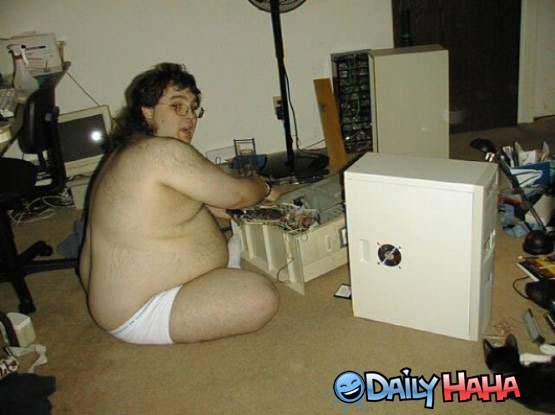 |
| More fundamentalist fans will tell you that true dorkdom isn't contained by things like haircuts or pants. |
I find this hard to believe considering the fact that dubs outsell the crap out of subs and American voice actors are seen as quasi-gods to gaggles of adoring fans at anime conventions around the nation. Plus, it would kind of hamper my voice-over aspirations if I didn’t appreciate a good dub, now wouldn’t it?
Essentially, the heart of the argument is supposed to be that subtitles allowed you to display notes whenever an unfamiliar word or topic was spoken by the characters, allowing you to get a more accurate translation of the cultural elements so you could experience the story in its intended context. When the voices are dubbed into English, you lose the ability to explain language idioms through visual footnotes in the corner of the screen (although some still use them).
Additionally, you’re under time constraints because all the dialogue must be condensed to match the mouth movements of the characters. Subsequently, dialogue, key plot points, and even character names are often altered, abridged, or removed from the series to facilitate the viewing experience for Western viewers, thus creating an adaptation rather than a translation. Carl Macek, one of the people who adapted the several anime series into the 1980s show Robotech , sums it up best:
, sums it up best:“You can’t just translate a Japanese TV series literally into English if you want the American public to accept it. There are all kinds of little changes you have to make – sort of like creating an American body language – so that the characters will seem more natural to American viewers. For one thing, Japanese cartoons are very slowly paced by American standards. They’re full of long, dramatic pauses while there’s a close-up of somebody’s face registering an emotion, or a slow camera pan across a beautiful background. Americans won’t sit still for that. They’ll turn to another channel.” -- page 310 of the book Watching Anime, Reading Manga: 25 years of Essays and Reviews.
I for one, don’t necessarily see the problem with adapting a story by putting it into a cultural context the audience can understand.
Actually, I’m the biggest hypocrite ever. I see no need why perfectly good Ricky Gervais comedies
 need to be remade into the same language just because Americans find a British accent too cumbersome to decipher.
 |
| Precisely. |
One of the most basic cultural differences was that Japan and America have different standards for what’s appropriate for their children. Death of main characters, on-camera or off, is usually a no-no in kid’s entertainment stateside, unless of course that character was a nameless, unsympathetic creature like the Putties, or they just really, really deserved it.
Take it away again, Carl:
 |
| The Putties: A face only a roundhouse kick could love. |
“I took the recommended TV standards and practices for children’s programming and I read them very carefully…the actual standards don’t say that you cannot show death under any circumstances; you can’t show characters getting hurt. They prohibit evil winning over good; they prohibit violence for violence’s sake. In Robotech, the good guys use only enough violence to defend themselves. Some of the bad guys are shown as honestly mistaken rather than as evil; they have a chance to reform. Some of the good guys make mistakes too, and they suffer for them."
Whether we’re aware of it or not, our culture has a moral code in almost all of our fictional entertainment. As I addressed in my Halloween Psych series, the just world phenomenon entails that we can only feel stable if we can believe we live in a world where good things happen to good people and bad things only happen to those who did something to deserve it.
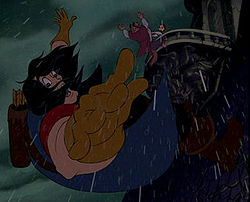 |
| Take that, unbridled chest hair. |
The Mighty Morphin Power Rangers often depicted moral quandaries that were confronted and resolved through good American values and teamwork. In the season two episode, “Doom Bloom,” Lord Zed plans to cause dissension in the ranks by using a poison plant to turn an already envious Kimberly into a raving piss ant who turns on her friends. In the end, she is returned to normal, but the point is made clear that Kimberly made herself susceptible to his attack because she had already allowed envy to sneak into her heart when she resented Trini’s volleyball club for getting more members than Kim’s gardening club.
In the Japanese version, people straight up die in the first five minutes (remember those lucky astronauts?). You don’t have to be a giant evil plant or Minotaur to get capped (although it certainly helps).
Bandora used to be a fairy queen but destroyed the dinosaurs and is basically a child murderer because she was actually a grieving mother. She repressed the memory that her own son was killed by a dinosaur so all she remembers is that she’s mad at pretty much everyone and can no longer stand the sight of children. The same as with its anime, Japan likes to display a level of moral ambiguity in both its heroes and its villains because it makes for a more dynamic story. In American kids shows, it seems good and evil always need to be clearly delineated because I guess our children are just simple-minded folk who don’t need to be confused with character motivations and psychoanalysis. They just want to see stuff go boom.
 |
| The Michael Bay School for Explosive-Happy Toddlers. |
In general, Japanese parents seem to be more lax in the amount of violence, death, and horrific images their children are allowed to see. This is why seeing the Japanese language, subtitled version of a children’s anime is always going to be much less censored and often a lot darker in tone than the dubs meant for distribution on American television. When it came out, parents in the U.S. protested the Power Rangers, decrying it as too violent and a bad influence on their kids. But sticking within the TV standards, the Mighty Morphin Power Rangers didn’t use excessive violence, they stuck to the guidelines of using it only enough to defend themselves and the world. That’s admirable right? After having seen the first 6 episodes of the Japanese version, I’m gonna say that the Land of the Rising Sun could teach these parents a thing or two about what real violence is.
For example, when the Putties are vanquished by the Power Rangers, they tend to just get kicked out of the view of the camera or disappear, while the Zyurangers are busy slashing them with swords and running them through with spears 300 style. One of the bad guys, Dora Skeleton, gets his head lopped off and one of the rangers throws it into the fiery pit off hell which just happens to be conveniently located to their left.
Oh, and did I forget to mention Satan?
 |
| Who? You mean Moi? |
When Bandora’s son is killed, she vows vengeance and makes a pact with Satan to give her power to destroy the planet. The friggin’ lord of the underworld gets a cameo on Japanese TV yet the U.S. media gets in a tizzy whenever the Big Man Upstairs gets a shout-out in a courtroom? Whatevs. We live in a country where Snuggies sell millions and Tila Tequila is considered famous enough to get her own TV shows so I guess there are some things I’ll just never understand.
Even when things aren’t necessarily violent or satanic in Zyurangers, they’re downright disturbing on a profound psychological level. Which makes it oh so much fun.
In one episode, the souls of Japanese children are trapped inside of trees in a forest that’s getting cut down to make way for a golf course. You see the children screaming and crying as the developers take chainsaws to their trunks and slice away. If they employed that plot device on Captain Planet, I can almost guarantee you that every Millenial youth would be a devout tree hugger and probably wouldn’t even pick flowers…just to be safe.
In one episode, the souls of Japanese children are trapped inside of trees in a forest that’s getting cut down to make way for a golf course. You see the children screaming and crying as the developers take chainsaws to their trunks and slice away. If they employed that plot device on Captain Planet, I can almost guarantee you that every Millenial youth would be a devout tree hugger and probably wouldn’t even pick flowers…just to be safe.
But devil worship, decapitation and deforestation aren’t the only things keeping the Zyurangers from being accepted by U.S. audiences.
Japan as a nation is really old and steeped with culture, tradition, and mythology to draw from that a n00b like America doesn’t really have in its arsenal. This time discrepancy may or may not be worth noting, but the backstory for the Power Rangers series began with Rita’s imprisonment only 10,000 years ago, whereas the original series found its genesis over 170 million years ago in the age of the dinosaurs where ancient gods and spirits were abundant. When Geki, the Tyrannoranger reads about the epic battle that took place, the images resemble the style of wood block paintings, a traditional form of Japanese art often used to represent scenes from history or mythology.
 |
| Oh yeah. |
The Zyurangers draw from ancient archetypes of brave, stoic warriors in ceremonial garb, well-versed in swordplay and martial arts, who cast off material and personal pleasures for the cause of the greater good. The Japanese are much more intrinsically spiritual and pantheistic than Western culture. In Shinto mythology, animals, trees, even inanimate objects like swords often have spirits of some kind. In the Power Rangers, the Beast Guardians were just referred to as Zords, machinery that that rangers could pilot and unite to form Megazord. In the original, the Beast Guardians were actual spirits that guarded their individual tribes in the age of the dinosaurs, and now help the Zyurangers along their path, often granting them power, visions, and sentient weapons. If the spirit is displeased with something, it will tell them so with words or gestures and will even eject the rangers from the cockpit if they tick them off enough. The “Megazord” that we all know and love, was not just an awesome machine, but an actual god with thoughts and feelings of its own.
 |
| "I feel like all we ever do is fight, guys. Can't we just sit around and, idunno, share how our days went?" |
The United States of America is only a couple hundred years old, and nobody really wants to create a show based on our “epic” history by creating a super task force consisting of historical figures like Ben Franklin, Thomas Edison, and Susan B. Anthony.
Or don't they...
Or don't they...
 |
| I invented bifocals, electricity, and awesomeness. |
That’s why I think the American adaptation of the series dropped the historical, spirit guide component and shifted the focus onto modern youth and technological advances such as the addition of Alpha the robot, Zordon’s command center, high-tech communicator devices, and the simplified revisioning of the Zords as merely giant robots that kicked butt. Besides the hang up that our own history is boring and lacks dynasties, samurai, and those uncomfortable-looking Japanese sandals, even if the show were to draw cultural influences from America’s past, who’s past and which culture would it be representing?
 |
| This guy's hat surely doesn't know. |
The Japanese are a very homogenized people with mostly everyone having similar genetic features and origin. America, with its colorful history and multicultural make up, would not be served well by a show that only featured the ancestry of a smaller percentage of the country’s demographic. This is why, even though the original was more epic and magical, it was a smart move for the American adapters to drop the cultural and historical elements and recast the show with a more diverse ensemble. It’s proven that people are more likely to watch a show if their demographic has a strong presence on it. Therefore they whitened up a couple of the kids to represent the ethnic majority, and then added an African-American, an Asian-American, and secured a stronger female demographic by adding a second girl to the squad.
I’m sure there are other reasons behind the changes and maybe I’m just dedicating a lot of analysis into what could have been completely arbitrary decisions by the Power Rangers staff. Either way, I definitely recommend looking up a few of the super sentai series on youtube or something, because you may even find that you like that version better or it could just provide you with a good laugh or WTF moment. Hopefully, seeing the foreign origin of what we thought of as iconic American television as children, will help us better realize that our cultural experiences have been somewhat tailored for us so to minimize the discomfort that comes from cross-cultural interaction. You may never get the chance to visit a foreign country or even leave your state, but it will be eye-opening to step outside of your myopic experience of the world and get a taste of another country through its music, literature, film, or even it’s weird screaming men with bowler hats:
Not sure how that article turned into a public service announcement for foreign exchange and cross-cultural understanding, but I hope you found the contrasts and comparisons between The Power Rangers and the series it was based on, at least somewhat entertaining.
Do you have any comments you’d want to share of cross-cultural experiences where things seemed completely new, intriguing, or bizarre to you? It could be something you learned while traveling in a different country, or even noticed about a foreign TV show while sitting in the comfort of your own room.
I love comments. I love them almost as much as I love kettle corn. Comments open up a possibility for conversation, and (if you haven’t noticed) I’m quite the talker.
Friday, November 12
Reason #3 Why The Real Adventures of Jonny Quest Was Ballin' Television
#3. Girl Power
Now, I don’t claim to be a connoisseur of old school Jonny Quest by any means, but in the episodes I have seen, I noticed very quickly that there was a noticeable absence of the XX chromosome. Always.
Apparently, I’m not alone in this realization:
by any means, but in the episodes I have seen, I noticed very quickly that there was a noticeable absence of the XX chromosome. Always.Apparently, I’m not alone in this realization:
"All in all, we see nine women largely featured and four-plus shown in crowd scenes [I estimated 8 - 3 in Riddle of the Gold, and 5 in Terror Island (crowd scene watching dragon) - LPB]. Of the nine featured women, three (Drena Hartman, Jezebel Jade, and Denise Lor) are of major importance to the storyline. (classicjq.com)
There were 26 episodes total in the original 1960s series and out of those eps and hundreds of characters, goons, and lizardmen they encountered, only 3 of the major players were of the female variety. Most of them seemed to either be flight attendants or treacherous skanks.
 |
| Welcome aboard Progress Airlines. My name's Cindy and I'll be your indentured servant for the flight. |
It seemed like most depictions of women on TV back in the day were either the pleasant, submissive type, the damsel in distress, or the alluring, yet morally deficient femme fatale who always brought down any man foolish enough to stumble into her web. The most prominent female character (who appeared in all of 2 episodes),“Jezebel” Jade was interesting because she was always so morally ambiguous that it was hard to tell where her true loyalties lay at any given moment. She was strong in the sense that she was able to thrive independent of male help, and in fact, rescued the Quest boys’ hapless butts on more than one occasion.
 |
| Jezebel Jade. 'Nuf said. |
Much of her perceived power, however, was drawn from the mysterious allure she held over men, allowing her to use and manipulate them like microwaved silly putty. This female character who was a thief, adventurer, and explorer was not as progressive as it sounds. The creators seemed to have no qualms revealing their attitude toward women who defied socially-sanctified gender roles in the very fact that they called her "Jezebel;" a name traditionally reserved for evil, sexually promiscuous women, and those who won't speak straight about their feelings for Doug Funny.
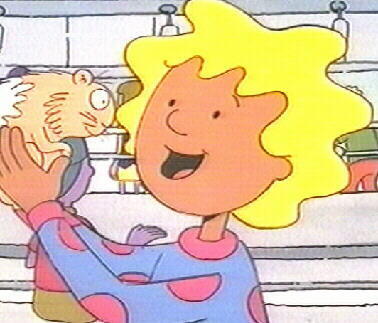 |
| Patty Mayonnaise: A mixed-message sending, gerbil holding Jezebel |
Fast forward 30 years and you have the birth of real girl power in the introduction of Race Bannon’s teenage daughter, Jessie. This might seem a little discriminatory, but one of the first major draws to The Real Adventures of Jonny Quest for me as a child was because there was a girl on the team. Plain and simple.
Hey, if you look at most American action-adventure shows of the 80s and 90s (i.e. Teenage Mutant Ninja Turtles , Batman
 , Spider-Man
 , G.I. Joe
 , Gargoyles
 , Transformers
 , etc.) the focus was mainly on male leads and if there were recurring female characters it seemed like they were either villains, love interests, or just put there because she gave the hero a constant derriere to save.
for me as a child was because there was a girl on the team. Plain and simple.Hey, if you look at most American action-adventure shows of the 80s and 90s (i.e. Teenage Mutant Ninja Turtles
, Batman, Spider-Man, G.I. Joe, Gargoyles, Transformers, etc.) the focus was mainly on male leads and if there were recurring female characters it seemed like they were either villains, love interests, or just put there because she gave the hero a constant derriere to save. |
| When you need 4 turtles to rescue you from a pig with a nose ring, it's probably time to re-evaluate your decisions in life. |
Seeing a female role model close to my age who was a computer whiz, could Maguyver a hot air balloon out of airplane wreckage and fabri c scraps, saved the boys from falling off cliffs, could pilot a plane, and knew her way around the business end of a gun was revolutionary for me. She did everything the boys did and often better, yet nobody ever called her femininity into question. Jessie was 100% woman.
 |
| And sometimes part bird according to the concept art. |
The brand-new writing crew for season 2 also gave Jessie girl power…the kind of power a girl had in Renaissance England when your most effective strategy in a tough situation was fainting, or not giving the king a male heir. The butt-kicking gal that we all knew and loved from the first 26 episodes suddenly finds herself possessed by hormonal ghosts, gets mummified, has a demon drain her life-force once or twice, and is otherwise unconscious on-again-off-again for a quarter of the season.
 |
| Jessie takes a nap while Jonny almost breaks his arm trying to keep her soul from getting sucked out. |
If that isn’t bad enough, they give her a daintier, more stereotypical “girl” look in the 2nd season. To complete the transformation, they outfit her with a horrid pink jumper contraption, shiny turquoise earrings, and a piercing Indiana Jones and the Temple of Doom damsel in distress cry which she deploys in basically every episode.
Oh yeah, and they pretty much remove all semblance of balls…uh, figuratively of course.
 |
| Because Race Bannon certainly doesn't create no flipper-like hermaphrodite babies. |
To basically sum up the differences between the two different Jessies, why don’t we play everyone’s favorite game: “Your Jessie Sucks.” In this game we ask each Jessie a question about how they would deal with hypothetical situations and they will answer using actual quotations from their respective season. This way we will be able to determine which Jessie is the real one, and which one sucks.
Host: Contestant #1,your plane goes down in Siberia and you come across a civilization in the ice. How do you explain their ability to sustain themselves without sunlight as a source of photosynthesis for vegetation?
Season 1 Jessie: “The geothermal energy from that volcano is creating its own eco-system. You’ve been farming the arable land between the lava flow and the ice cliffs.”
Host: Interesting. Contestant #2, how would you handle it if you were to go to Tweet an adorable picture of Bandit to all your friends but Twitter wouldn’t load due to high volumes of traffic?
Season 2 Jessie: “Johnnyyyyyyyyyyyyyyyyyyyyyyyyyyyyyyyyyyyyyyyyyyyyyyyyyyyy---
*quick commercial break*
...*Returns from break*
--- yyyyyyyyyyyyy!!!”
I think we have our answer ladies and gentlemen.
The addition of Jessie also brought new dimensions to the existing Quest team members. It was intriguing to see the hunky James Bond-like lady-killer and action man, Race Bannon, become incredibly sensitive and outright vulnerable when it came to the well-being and safety of his daughter. Jessie, being close in age to Jonny, provided both a romantic interest and a foil for the young Quest. With Jessie being a brainiac like Dr. Quest and Jonny being a kung-fu action man like Race, they each provided perceived competition for their individual father’s affections, and even made one wonder whether the two weren’t switched at birth.
You know, Benton Quest also originally had red hair in the 1960s series…
You know, Benton Quest also originally had red hair in the 1960s series…
 | ||
| "Benton, you are not the father." |
 |
| "Word." |
“As Race's daughter, she is fit and athletic but she is not Superwoman in training. She cannot, even with all Race's tuition in the martial arts, overpower an adult[…]But though Jessie is not as strong, physically, as Jonny, she is just as tough. She's smarter, too, and more thoughtful."
Jessie is a well-rounded character who has her strengths and can hold her own but isn’t perfect and even has areas she struggles with. Choosing to make her human and not some impossible superhero who is good at everything truly makes her more relatable to the girls in the viewing audience who may be struggling with their own insecurities.
“Like Hadji, Jessie has a strong interest in Dr. Quest's work and she often has a better grasp of the academic and the theoretical than Jonny. So, just as Jonny likes to hang out with Race - the man of action - Jessie likes to spend time with Dr. Quest. She shares his consuming interest in archaeology, physics and the paranormal. Race may be a touch envious of Jessie's relationship with Benton. Call it fatherly jealousy. But Race is also extremely proud that his daughter can hold her own with a genius like Dr. Quest. The very real differences between Jessie and Jonny should make for interesting crossplay and tensions[…]Maybe some day, the two will become more than friends. Maybe Jessie really prefers Hadji's company. Sometimes Jonny thinks so.”
As we all know, jealousy and competition are the stuff of compelling television because tension can add spice and momentum to a plot. The set up Lawrence established here by tossing Jessie in the mix, set the stage for all sorts of potential drama and deeper character motivations.
 |
| Go go, Gadget Drama. |
The episode “Eclipse” has Hadji bewitched to fall in love with a female vampire/demon thingie and Jessie becomes green with envy, which seems to unsettle young Mr. Quest (all of us hopeless romantics are pretty sure it’s because he’s madly in love with her and wants to have tons of ginger babies with her. But this is just a theory.)
Jessie is truly the epitome of girl power because she is not sexualized and reduced to being objectified by her fellow cast members. They don’t endow her with ridiculous cleavage, and they don’t force her to flaunt her body in skimpy outfits for the pleasure of male viewers. There’s no gratuitous jiggling or bouncing when she walks and thankfully none of the skeevy action panty-shots we’ve become so accustomed to in many comic books and anime (here’s looking at you, Sailor Scouts).
 |
| Yet another reason to consider pants for all of your crime-fighting needs. |
Despite what baggage the word might carry to some people, "feminism" is simply used to describe a theory in which men and women are equal. It has nothing to do with bra burning and man-hating; just a matter of asking to be treated with the same respect men get. I believe the creators of TRAJQ really did Jessie (and girls everywhere) a service when they chose to ignore her "lovely lady lumps," and focus on developing a great character that people would be drawn to based on her brains, integrity, and bad-assitude.

Women are showcased quite a bit on this series as anything from old western gunslingers to astronauts and they often play a vital role in the outcome of the episodes. Sometimes the women have so much awesome in them that they come back to life as ghosts just to be like, “hey guys, remember how awesome I was?...yeah so, funny thing was, I had too much awesome for one lifetime so I had to come back again just to relieve myself of some of this awesomeness.”
And if I haven't already hammered home the point that this show has awesome female heroes, check out my mock trailer: Kill Belle 2. Using audio bytes from the Kill Bill 2 trailer, I pay homage to Belle Bonnet, one of TRAJQ's coolest undead lady characters ever:
And if I haven't already hammered home the point that this show has awesome female heroes, check out my mock trailer: Kill Belle 2. Using audio bytes from the Kill Bill 2
trailer, I pay homage to Belle Bonnet, one of TRAJQ's coolest undead lady characters ever: What are your thoughts on the women of the JQ universe?
Become a follower, leave a comment, and join in on the discussion!
Oh yeah, and buy the DVD yo:
Become a follower, leave a comment, and join in on the discussion!
Oh yeah, and buy the DVD yo:
Subscribe to:
Posts (Atom)